
Many people spend most of their day sitting, working at a desk, driving, attending meetings, or relaxing at home. While sitting is a normal part of daily life, spending several hours in the same position can reduce hip mobility and make your muscles feel stiff.
Your hip flexors are a group of muscles located at the front of your hips that help you lift your legs, walk, run, and perform many everyday movements. When these muscles stay in a shortened position for long periods, they may become tight and less comfortable when you move.
The good news is that improving hip mobility does not require complicated exercises or long workouts. A few minutes of consistent stretching can help you maintain better movement, improve flexibility, and reduce feelings of stiffness after long periods of sitting.
This routine includes simple hip flexor stretches that can be performed at home, at the office, or before exercise.
1. Half-Kneeling Hip Flexor Stretch
- Start in a half-kneeling position with one knee on the ground and the opposite foot in front of you.
- Keep your chest tall and your spine in a neutral position.
- Slightly tuck your pelvis by bringing your belt buckle upward.
- Slowly move your hips forward until you feel a stretch in the front of the hip of the kneeling leg.
- Hold the position while breathing slowly.
The half-kneeling hip flexor stretch targets the iliopsoas, one of the main hip flexor muscles. This muscle can become shortened when you spend many hours sitting, because the hip remains in a flexed position for extended periods. Maintaining flexibility in the hip flexors can help support healthier movement patterns during walking, training, and daily activities.
2. Standing Hip Flexor and Quadriceps Stretch
- Stand tall and use a wall or chair for balance if needed.
- Bend one knee and bring your heel toward your glutes.
- Hold your ankle with your hand.
- Keep your knees close together and gently move your hips forward.
- Keep your chest upright and avoid arching your lower back.
This stretch targets the quadriceps and rectus femoris, a muscle that crosses both the knee and hip joints. Because the rectus femoris assists with hip flexion, it can become stiff from prolonged sitting. Stretching this area can help improve comfort and movement around the hips.
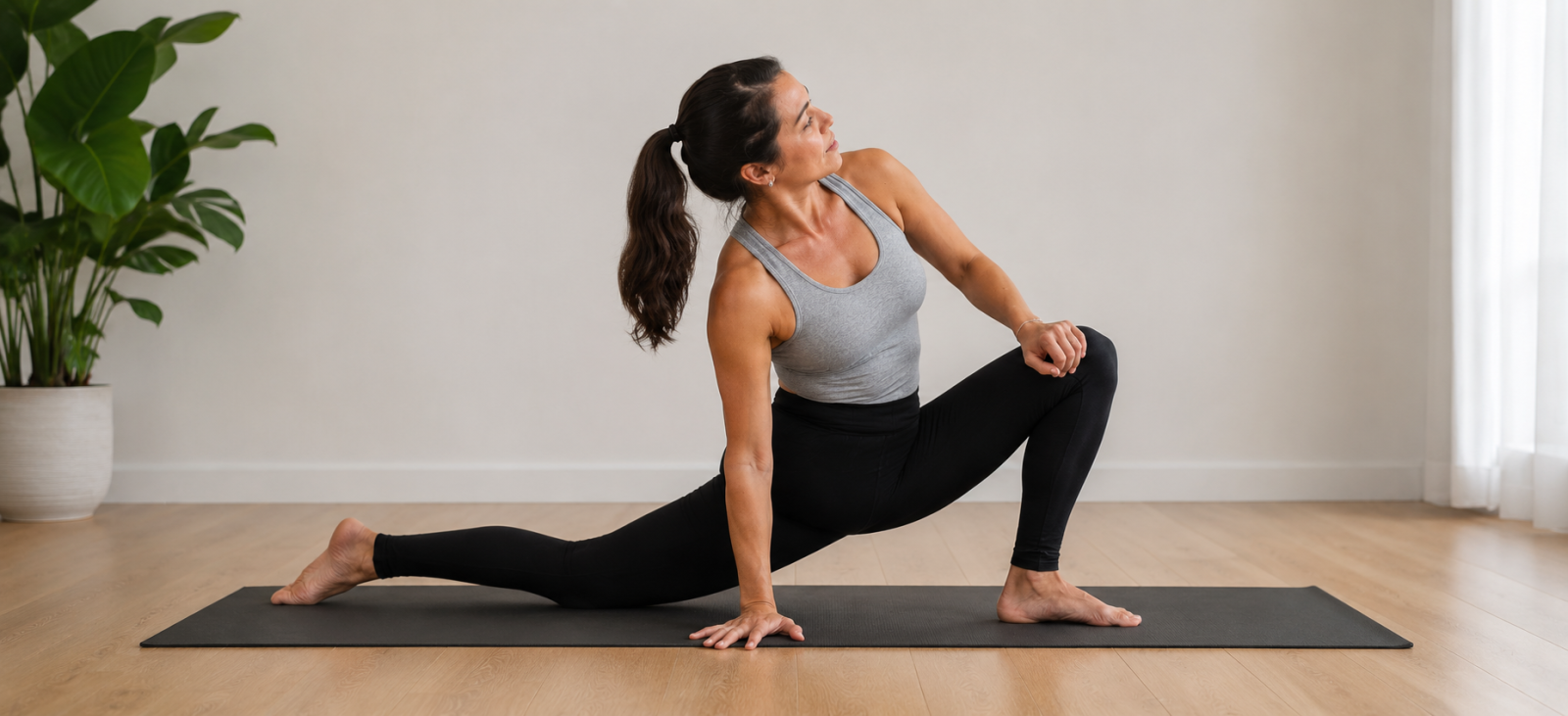
3. World's Greatest Stretch
- Begin in a standing position and step forward into a deep lunge.
- Place both hands on the floor beside your front foot.
- Rotate your chest toward the front leg and reach one arm toward the ceiling.
- Return to the starting position and repeat on the opposite side.
This movement combines hip mobility, hamstring mobility, and thoracic spine rotation. Unlike a traditional static stretch, this exercise helps improve active mobility- the ability to control your range of motion during movement.
Make it stick
Improving mobility is a process. You do not need to spend an hour stretching every day to see benefits.
A simple routine performed consistently can help you move better and feel less stiff throughout your day.
Try adding these stretches:
- After sitting for several hours
- Before strength training
- After a long drive
- During your morning routine
- Before recreational activities
Remember: healthy hips are not only about flexibility. They also require strength, stability, and regular movement.